When a child is first diagnosed with autism spectrum disorder, parents are instantly thrust into a whirlwind of medical jargon, educational acronyms, and specialized terminology. Of all the new phrases you will encounter, one stands out as the most prominent: ABA. But what does ABA stand for, and more importantly, what does this therapy actually mean for your child’s future development and daily happiness?
ABA stands for Applied Behavior Analysis. For decades, it has been recognized by the U.S. Surgeon General and major medical associations as the gold-standard treatment for autism. However, the Applied Behavior Analysis definition is far more than just a clinical buzzword. It represents a deeply empathetic, science-backed approach to helping children navigate a complex world, build essential life skills, and communicate their needs effectively and confidently.
The Applied Behavior Analysis Definition: Breaking Down the Acronym
To truly grasp the ABA therapy meaning in autism, we must look at the three foundational pillars that make up its name. As Board Certified Behavior Analysts (BCBAs), our job is not to try and change who your child is. Instead, we analyze why a child engages in certain actions and use that understanding to support them in ways that matter most to their daily lives.
“Applied”: A Focus on Real-World Clinical Significance
In clinical research, a scientific finding is only valuable if it makes a tangible difference to someone’s life. The “Applied” in ABA means that the therapy focuses entirely on behaviors and skills that hold profound social and practical significance for the child and their family.
We are not teaching skills in a clinical vacuum. If a child learns to identify colors at a therapy desk but cannot use those words to ask for their favorite blue cup at the dinner table, the intervention has not fully succeeded. The applied nature of this treatment ensures that every single goal we set—whether it is learning to tie shoes, successfully engaging in cooperative play with a sibling, or safely self-soothing during a loud transition—directly improves the child’s day-to-day quality of life. We apply the science of learning to the real world, ensuring that breakthroughs generalize seamlessly to the playground, the grocery store, and the classroom.
“Behavior”: Understanding Actions as Meaningful Communication
When the general public hears the word “behavior,” they often associate it with discipline or “acting out.” In the context of psychological science, behavior simply refers to anything a person says or does. It is entirely neutral.
For children on the autism spectrum, behavior is frequently their most profound form of communication. A child who covers their ears and hums loudly is not “misbehaving”; they are communicating that their sensory environment is overwhelming. A child who struggles to transition away from a tablet is not just being stubborn; they are expressing a natural behavioral response to an abrupt shift in their expected routine.
By viewing behavior objectively and empathetically, ABA therapists can identify the core function behind an action. We ask ourselves: Is the child seeking adult attention? Are they trying to escape an overwhelming sensory situation? Do they need access to a specific preferred item? Once we understand the “why” behind the action, we can teach a safer, more effective replacement behavior—such as using vocal words, sign language, or an AAC device to request a break.
“Analysis”: Data-Driven Progress and Customization
The “Analysis” component is what elevates ABA from a standard educational tutoring approach to a rigorous, evidence-based medical science. In ABA, every intervention is carefully monitored, measured, and graphed.
Therapists collect ongoing data during every session to track exactly how a child is responding to a specific teaching strategy. If the data trends upward and shows that a child is mastering a skill, we celebrate that milestone and gently increase the challenge. Conversely, if the visual data shows that progress has stalled, we never blame the child. Instead, we analyze the data, pivot our approach, modify the environment, and try a new teaching method. This constant, data-driven analysis ensures that your child’s treatment plan is never stagnant. It is a living, breathing blueprint that evolves exactly as your child does.

What is Behavior Analysis for Children in Daily Practice?
Understanding the textbook definition is a crucial first step, but what is behavior analysis for children when you actually see it in action? At its core, modern, assent-based ABA is play-based, highly engaging, and entirely individualized to the learner’s unique motivations.
It relies heavily on positive reinforcement—the practice of identifying what motivates a child (a favorite toy, a tickle, high-praise) and using that specific motivation to encourage learning and participation.
Here are the key takeaways of what ABA therapy looks like in practical application:
-
Positive Reinforcement: Highlighting and rewarding successes rather than punishing mistakes. This builds profound self-confidence and intrinsic motivation over time.
-
Prompting and Fading: Providing just enough help (such as a gentle physical guide or a verbal hint) to ensure the child succeeds on a new task, then systematically fading that help away to build total, lasting independence.
-
Task Analysis: Taking a complex, overwhelming skill (like washing hands or brushing teeth) and breaking it down into tiny, manageable steps that can be taught one at a time.
-
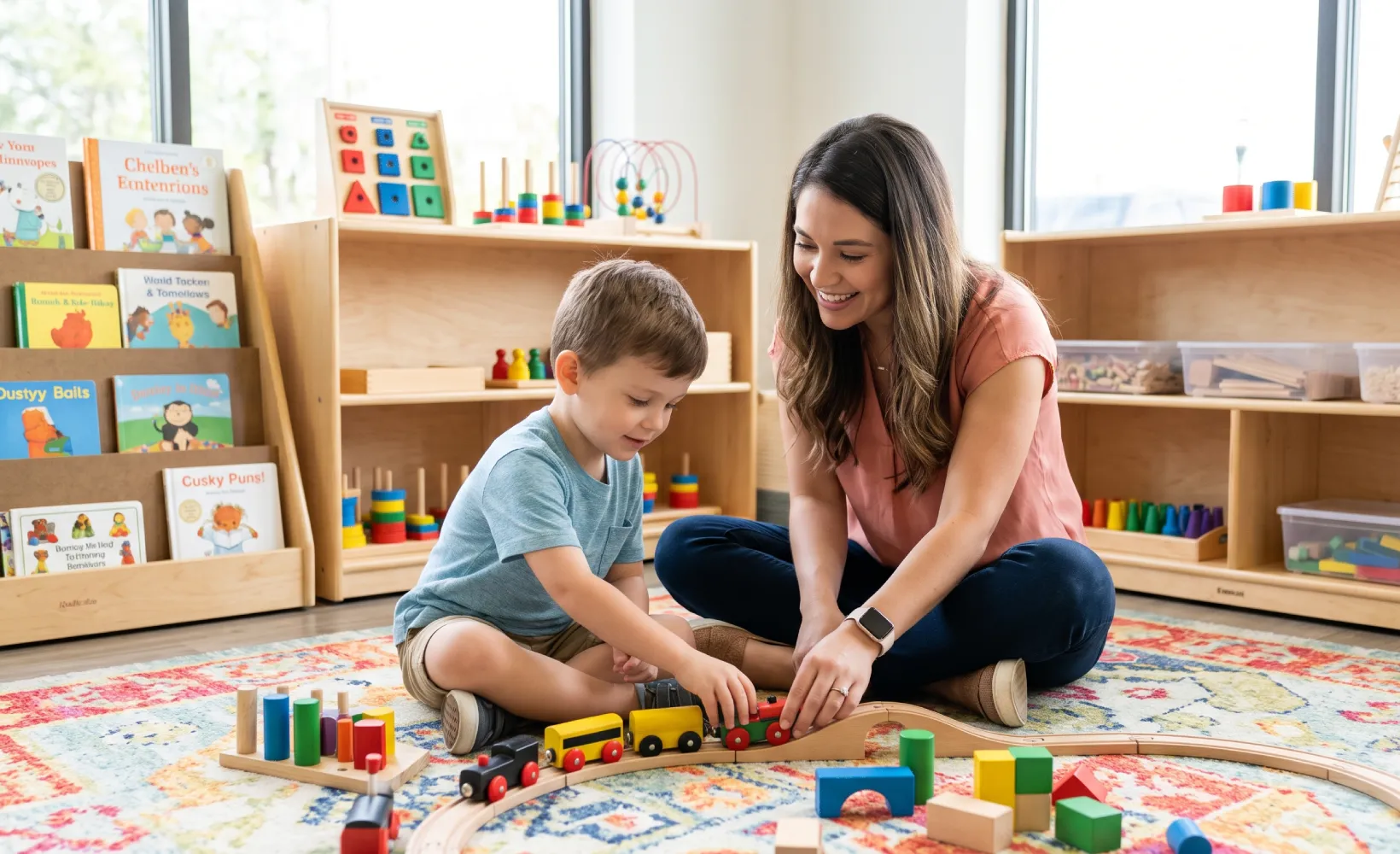
Natural Environment Teaching (NET): Embedding powerful learning opportunities into natural play. If a child loves toy trains, the therapist will use the train set to teach counting, color recognition, and conversational turn-taking.
The Clinical Significance: From Foundational Science to Positive Outcomes
The true ABA therapy meaning in autism lies in its ultimate goal: fostering independence, safety, and self-advocacy. Early iterations of behavioral science decades ago were sometimes rigid, but today’s ABA is a compassionate, collaborative, and neurodiversity-affirming process.
We do not seek to “cure” autism or mask who a child naturally is. A child’s unique personality, intense interests, and joyful quirks are celebrated and often used as the bedrock of our therapy. Instead, we use behavior analysis to systematically tear down the barriers that prevent them from accessing their world safely and happily.
By applying behavioral principles, we help children build crucial, life-changing skill sets:
-
Communication Skills: Transitioning a child from frustration to effective self-expression, whether they communicate vocally, via sign language, or through assistive technology devices.
-
Social Skills: Learning to navigate complex peer interactions, share resources, take turns, and read social cues in a structured way that makes sense to them.
-
Daily Living Skills: Mastering essential self-care tasks like dressing, feeding, and toileting to promote long-term autonomy and dignity.
-
Emotional Regulation: Developing healthy, safe coping mechanisms to manage anxiety, sensory overload, and frustration without resorting to self-injurious or aggressive behaviors.

Navigating the Next Steps for Your Child in Houston
Recognizing that your child needs professional support is a monumental and brave step, but navigating the logistics of healthcare shouldn’t have to be a stressful burden. We understand that after learning what ABA stands for and understanding how it can help, the immediate next questions for most parents revolve around accessibility, scheduling, and financial cost.
For families living in Texas, understanding your specific behavioral health benefits is crucial. Texas has specific state mandates regarding autism coverage, but insurance policies can still be incredibly complex to decode on your own. To help ease this administrative burden, we highly encourage families to review our comprehensive guide on ABA therapy insurance coverage in Texas. Our dedicated administrative team takes pride in handling the heavy lifting of insurance verification and authorizations, ensuring that you can remain focused entirely on your child’s developmental journey rather than paperwork.
Partner with Zenith Learning ABA in Houston, TX
At Zenith Learning ABA, we know that behind every diagnostic term, evaluation report, and medical acronym is a brilliant child with boundless potential and a family searching for the right support system. Now that you know exactly what ABA stands for, we invite you to see what it looks like when delivered with unparalleled clinical expertise and genuine compassion.
Our highly trained Board Certified Behavior Analysts (BCBAs) and Registered Behavior Technicians (RBTs) specialize in providing premier In-Home and Clinic ABA Services tailored specifically to the Houston community. We believe in partnering closely with parents, providing ongoing, hands-on caregiver training, and ensuring that the skills your child learns in our sessions translate seamlessly into your family’s daily life.
Ready to unlock your child’s full potential?
Contact Zenith Learning ABA today. Book a personalized consultation with our Houston-based clinical team, and let’s discuss how a customized Applied Behavior Analysis program can help your child thrive.
-
Location: Houston, TX (77042)
-
Services: In-Home & Clinic ABA Services
-
Website: https://zenithlearningaba.org